
What makes a pie... a pie?
A controversial debate. And some favourite British pie (and tart) recipes.

Hello there and welcome back to Bake Experiments - on a mission to make patisserie easier for the home baker. Ta for being here!
As ever, if you like what you read, and I hope you do, I’d be thrilled if you tap that heart, share or subscribe.
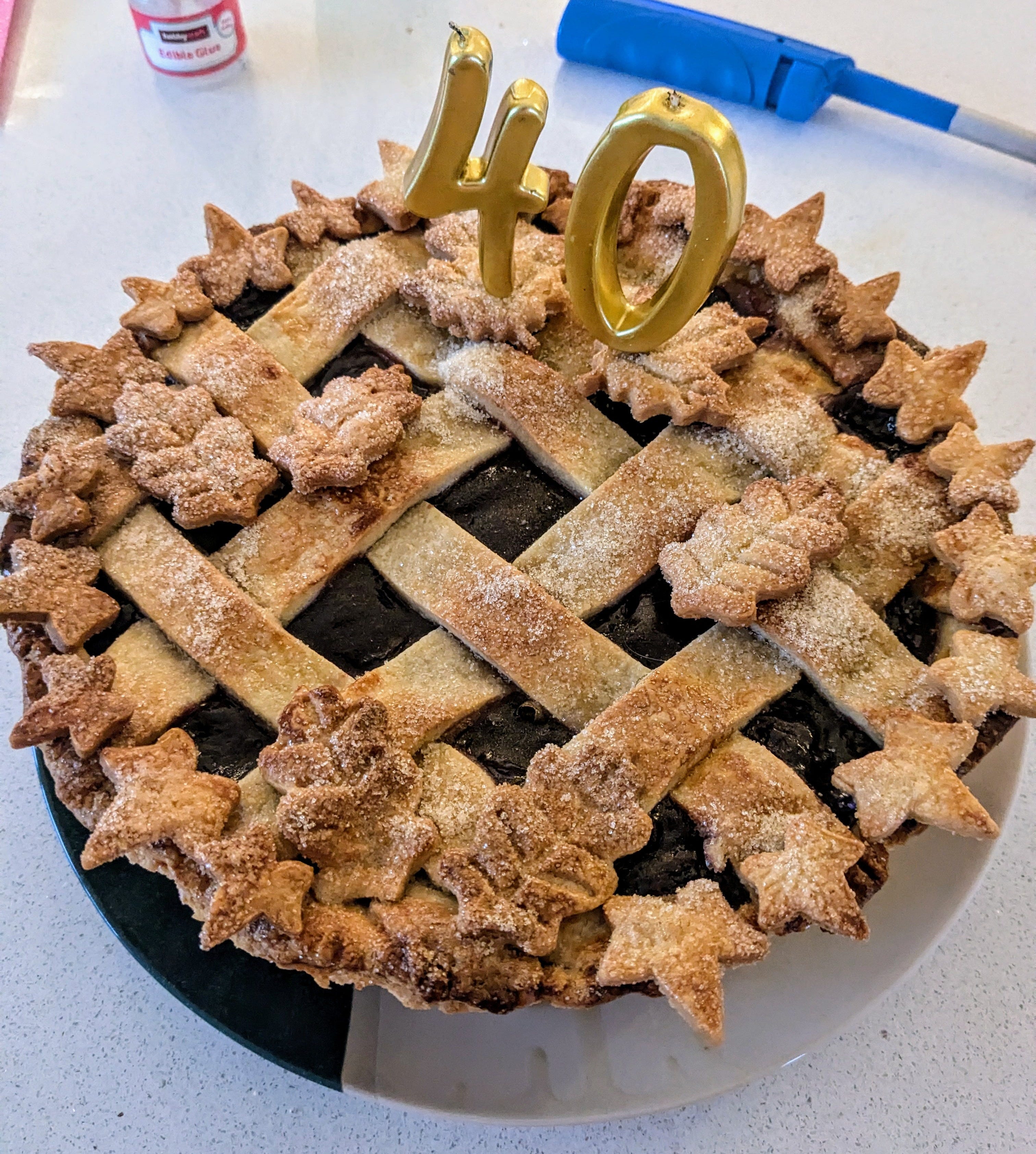
In her book Completely Perfect, food writer Felicity Cloake calls pies: “god’s gift to the cook.” I’m inclined to agree. But, what defines a pie? What differentiates a pie, from a tart?
I asked this question on Substack notes nearly a year ago. And it is still my most hotly debated note… Before we begin, this entire post is written with affection. All views were valid, and made absolutely fascinating reading.
The British Distinction
For this Brit, a pie is distinguished by its top. This top can be pastry, meringue, even mashed potato for fish, shepherds or cottage pie. But it must have a top.
However… if you wish to enter the British Pie Awards, the definition of a pie is “a filling totally encased in pastry and baked.”
Which means meringue pie is out, pies topped with mash are out. Even pies with lattice work are not accepted. Which rather throws a spanner in my ‘top’ theory.
By contrast, for us Brits, a tart definitely does not have a top. Custard Tart, no top. Treacle Tart, no top. Jam Tart, no top.
Yet, this is not the way others in the world feel. Oh no.
In my hotly debated note, some said it was about the type of pastry or the fillings used. Others argued that it was the shape of the case that was vital - fluted equals pie, straight sides equal tart.
The size and type of pan were debated. Pie dishes were large and deep, tart cases were smaller and shallow.
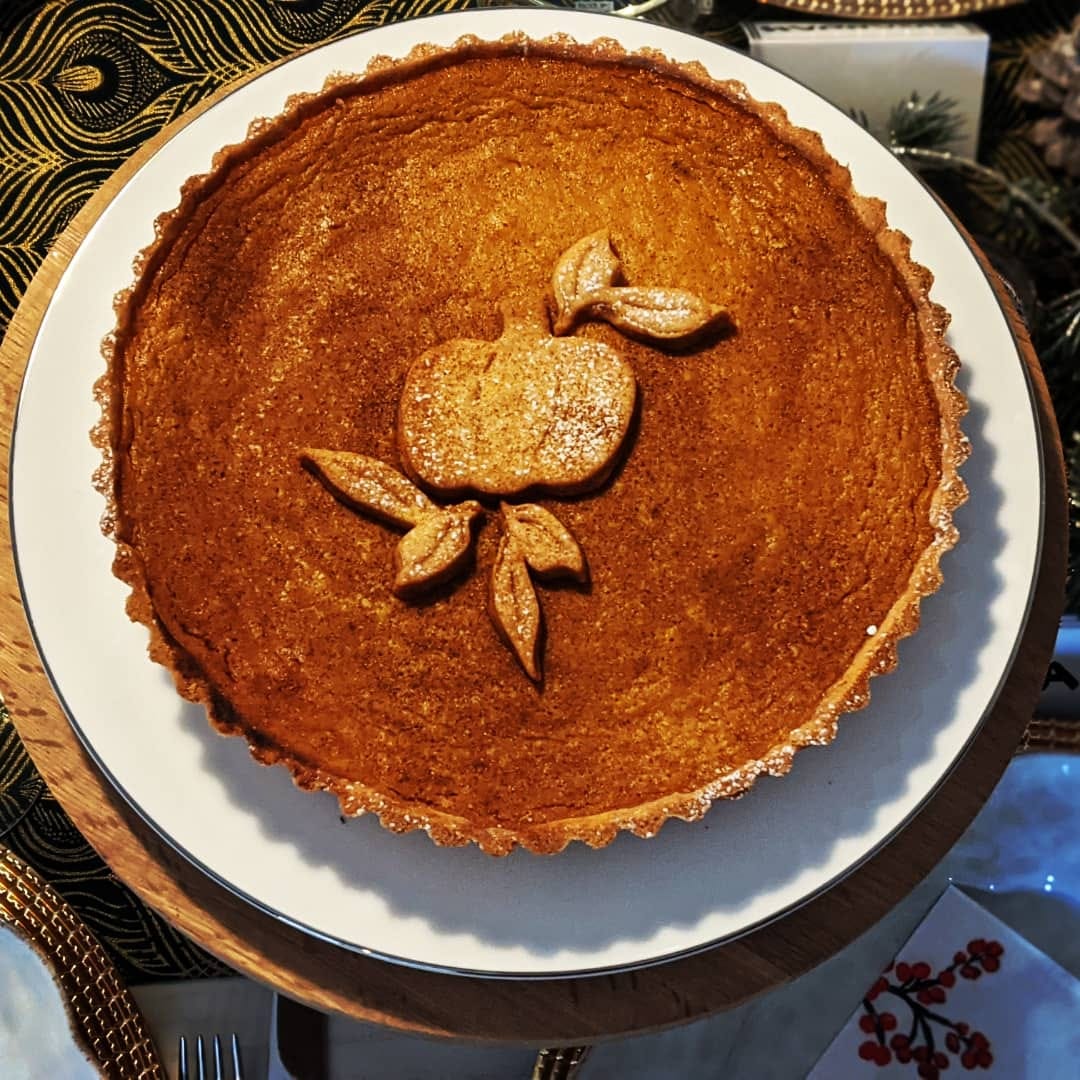
Examples were made around Key Lime Pie or Boston Cream Pie. And what of Pumpkin or Pecan Pie? Or Custard Pie… which I would call a tart.
Here in the UK custard pies are a whipped cream confection we slap in actor’s faces at the Christmas panto. A tradition which dates back to 1909, when comedian Ben Turpin was ‘pied’ in the film Mr Flip.1 We even hold a Custard Pie Throwing championship every year in Kent.
Conversely, the French despair at our Lemon Meringue Pie, for them it is a Tarte Au Citron Meringuée. Apparently, there is no word in French that equates to the word ‘pie’. For what we would consider a pie, I’ve read they call it ‘tarte d l’anglais’, or ‘English Tart’.2
Although there is also the Tourtière, a French-Canadian meat pie, recently written about by the lovely Elizabeth Pizzinato.
Where do you stand on the pie vs. tart debate? Let me know in comments.
Colour me intrigued. How did this divergence come about? And where did the pie come from anyway?
Some History
Food historian Regula Ysewijn tells us that while the whole of Europe ate meat pies during the Renaissance, it is the British that bought them firmly into our identity and culture. We eat £1 billion worth of pies each year, and have a British Pie Week in March.3
In Middle English, they were called ‘bake metes’ and served more as a dish to cook food inside, to trap the juices and prevent the meat from burning. The crust - called a ‘coffin’ - wasn’t necessarily eaten, rather used as a serving dish to be divided among dinner guests.4
Over the centuries, ovens and cooking techniques became more sophisticated, pie crust became more delicate and edible. It became part of the dish. And if you were well to do, the pie became ever more intricate in terms of decoration. The infamous Swan Pie being the most elaborate served at royal banquets.
Tarts, on the other hand, can be traced back to recipes published in English cookbook The Forme of Cury from Approx. 1390, as a way to show off fruits and custards.5 In Tasting History, Max Miller shares a recipe for ‘Tart de Bry’ from the book, made from a cheesy sort of custard, spiced with saffron and ginger.
The Divergence
Some distinctly American pies came from England; apple pies were common throughout the centuries - although Jane Austen called them an apple tart.6
And Max Miller includes a recipe for ‘Pumpion Pie’ aka. Pumpkin Pie, from England in 1670. It is rather different from the Pumpkin Pie we know and love today, including herbs, raisins and apples alongside pumpkin slices in a pastry crust.
It seems when colonists came to America, what we English called a tart, Americans began to call a pie.
According to website slate.com, and author Carl Degler, this was a sign of a developing nationality. In Out of Our Past: The Forces That Shaped Modern America, Carl Degler tells us that Americans began to make up their own words. A meat pie in England became a pot pie in the colonies. And ‘pie’ became reserved for fruit pastry.
When it comes to pies and tarts, I’m not sure there is a specific distinction. Jenni Field of ‘Pastry Chef Online’ talks of her frustrations when she asked for a distinction in culinary school, and was left with a murky answer.
In short, tarts and pies have been on a culinary journey, evolving and changing to create many varieties and traditions. As such, pie can mean different things to different people.
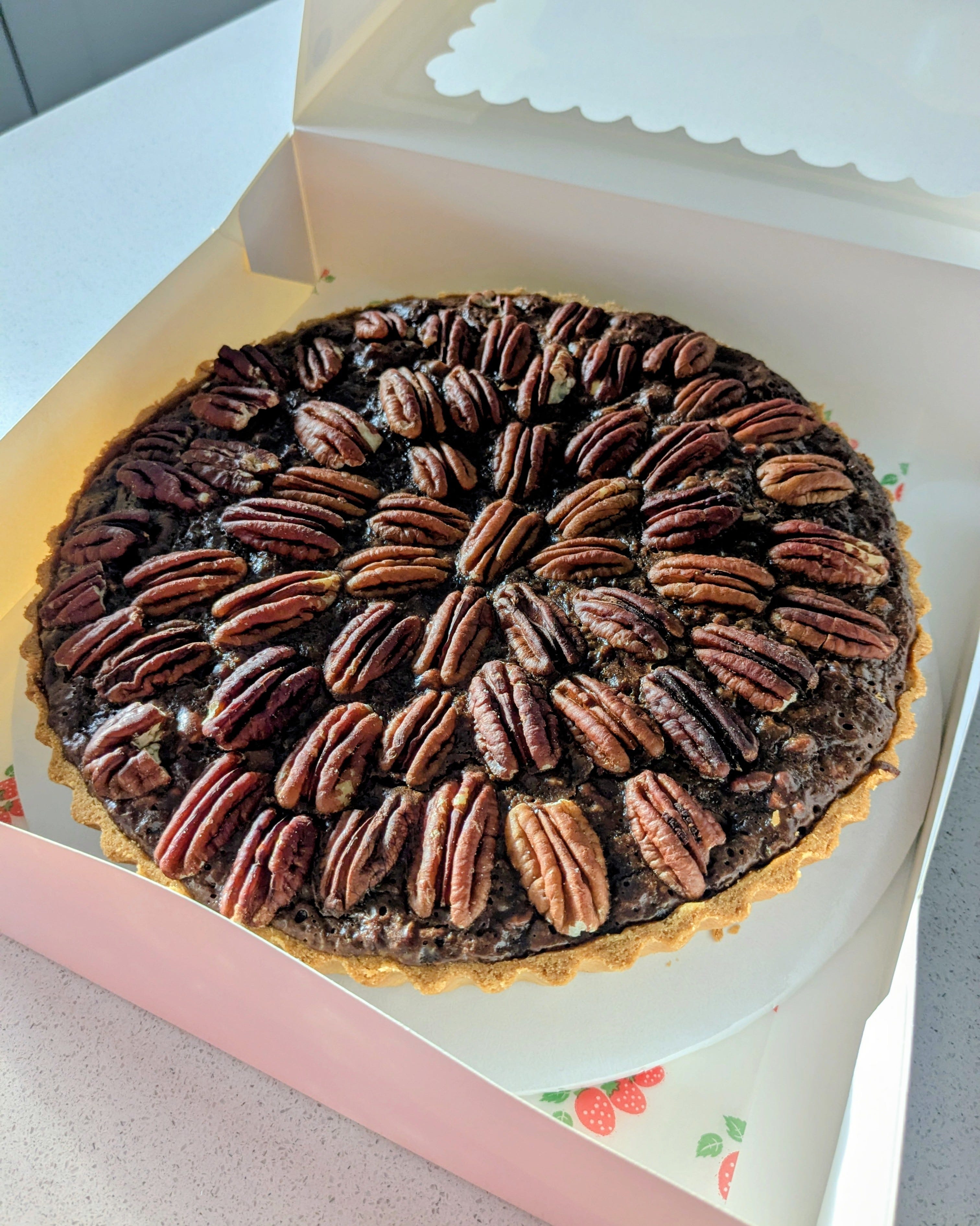
For me, the pie will always have a top. Even when I bake a pecan pie, I create a ‘top’ of pecans in a pattern. But whatever your thoughts on pies vs. tarts, it’s just semantics really. And I think we can all agree, there is nothing better than a slice of perfectly baked pie (or tart).
THANK YOU to everyone for your donations, and to paid subscribers, so far! Everything I personally earn from Substack in 2025 I will donate to The World Central Kitchen and FoodCycle.
My favourite British Pie & Tart Recipes
Shepherds Pie Vs. Cottage Pie
A mince stew topped with mashed potato and baked is a British staple. Whether you go for a Shepherds (lamb mince) or Cottage (beef), a dash of Worcestershire sauce adds zing, and is a non negotiable.
These two recipes always go down well with my family:
Fish Pie
Usually a mix of white and smoked fish with prawns, poached in a pale sauce, sometimes mixed with hard boiled eggs, and topped with fluffy mashed potato. Baked until crisp, and often served with peas.
In her version, Felicity Cloake calls Fish Pie an “honourary pie”, and the culinary equivalent of a cosy pair of slippers.
Here’s her recipe: Fish Pie
Steak and Ale Pie
There’s a pub down the road from me, where they put a beef and ale stew in a pot, separately bake some puff pastry, plonk it on top and… ta da! A steak and ale pie!
That does feel like cheating, but this simple recipe is certainly a crowd pleaser: Steak and Ale Pie
Lemon Meringue Pie
Filled with lemon curd and topped with fluffy meringue, this is my Dad's favourite.
Last year, I even experimented with the best meringue to top a Lemon Meringue Pie. Check it out here.
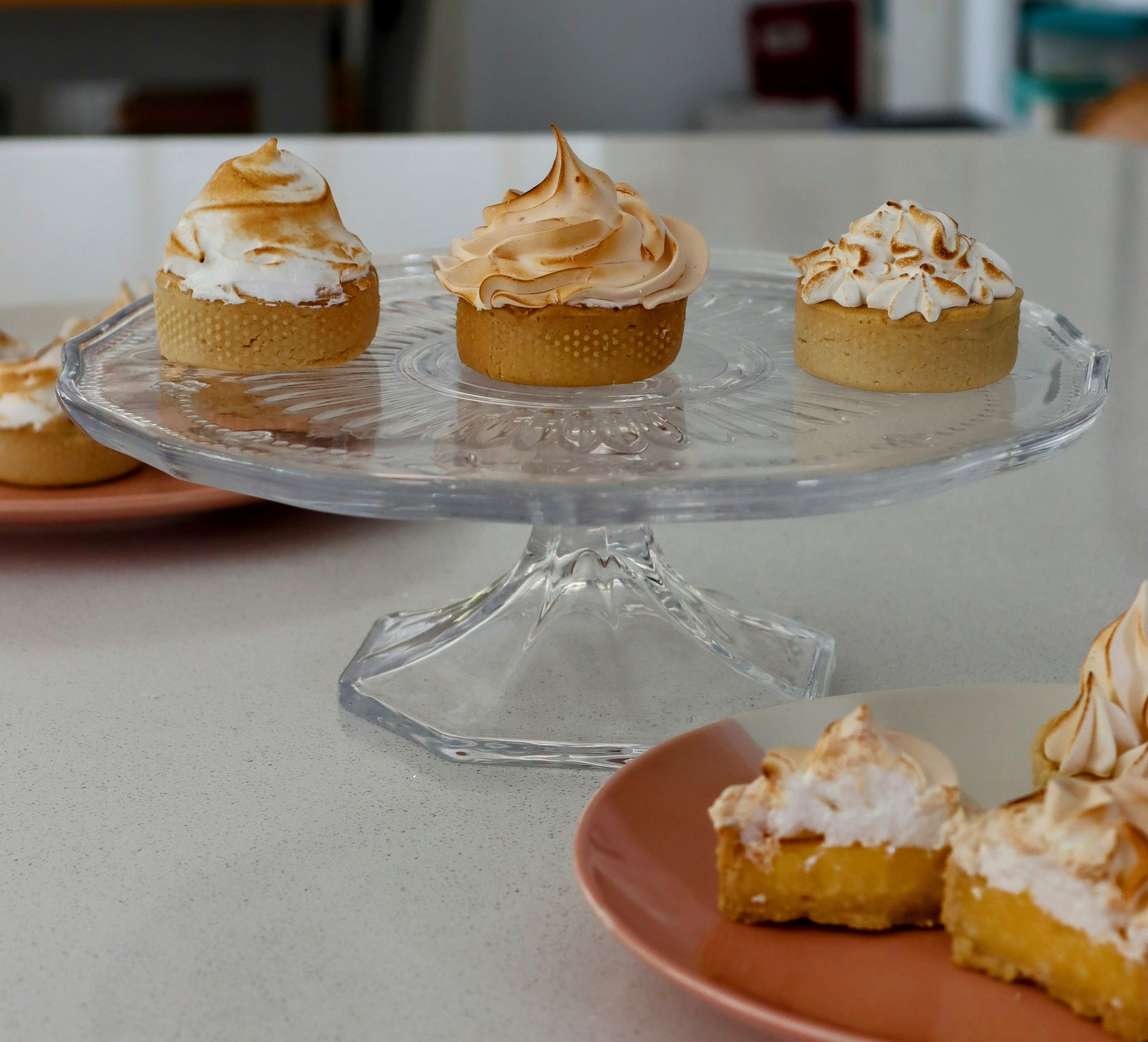
Custard Tart
Unlike the Portuguese pastel de nata, our Custard Tart is made with shortcrust pastry. When you remove it from the oven, the custard filling must still have the slightest wobble. This will ensure a perfectly baked Custard Tart, finished with a grating of fresh nutmeg. Perfection.
A very good Custard Tart recipe.
Treacle Tart
The modern version of the treacle tart dates to the invention of golden syrup in 1883. Golden syrup has a very specific flavour, which can be hard to replicate. Dark Corn Syrup may be the closest, although this recipe for a golden syrup substitute from Bigger Bolder Baking is certainly worth a look.
I love this Treacle Tart recipe by Julie Jones.
Bakewell Tart
Thanks to Mr Kipling, the Bakewell Tart is known as a tiny tart filled with cherry jam, almond frangipane and topped with sticky icing and a glace cherry.
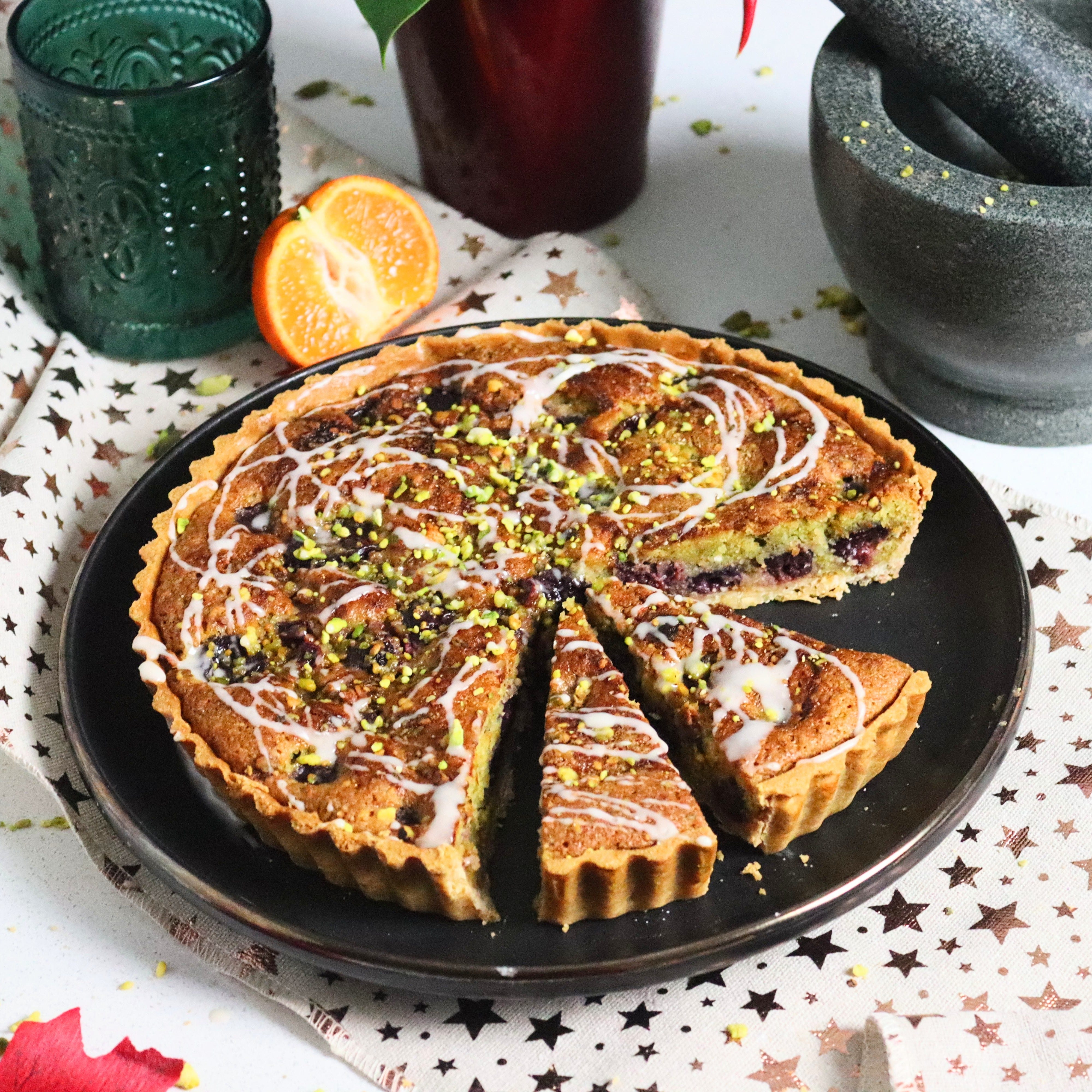
The original Bakewell version is a little different, with no sticky icing or glace cherry to be seen. Perhaps you will enjoy my wintery twist, with a spiced pastry, sour cherries and pistachios, which was recently featured in this awesome Pie Palooza by
.
Jam Tarts
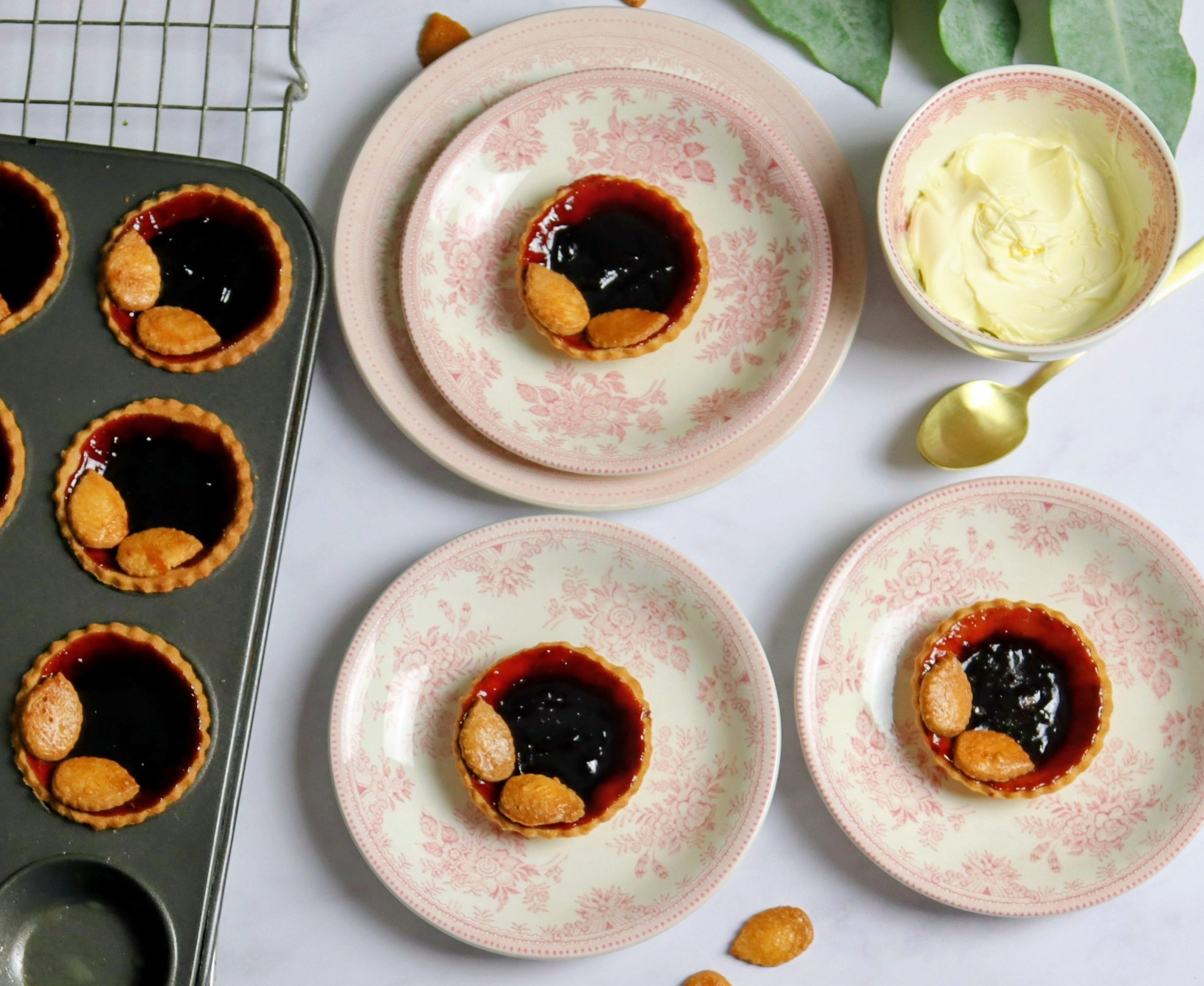
Ah, the Queen of hearts, she made some tarts. No British tea time is complete without these little tarts, most traditionally filled with strawberry jam. But any jam will do. I’m very partial to my Damson Jam Tarts.
Extra mention: The Pork Pie.
Made with hot water pastry and often hand raised, these little pies are filled with chopped pork and mince, and jelly, to keep them moist.
I personally don't like pork pies. The gelatinous pork trotter jelly makes me queasy. Now watch as all the Brits unsubscribe with horror! This is worse than the time I said I don't like tea!! You see, Pork Pies are so quintessentially British, very strong feelings are held. And I had to include them in this post.
My husband is a fan, and he recommends this recipe.
Do you have a favourite tart or pie? Tell me all about it. And why you think it's a tart, or a pie.
Until next time…
According to Niki Signit, Lateral Cooking, p. 460
According to Pastry Chef Online, by Jenni Field
Taken from ‘A History of Pies’ from The British Pie Awards
From Regula Ysewijn, Oats in the North, Wheat in the South, The History of British Baking, Savoury & Sweet, p. 192
Gareth Whitton, Tarts Anon, p.45
Diane Purkiss, English Food: A People’s History, p. 253
Ah yes, it reminds me of a trip to a Hampton Court. The tour guide also talked about the days when pies were used as cooking vessels because pans and metal trays were expensive. Apparently the pastry was pretty rough so was thrown away afterwards. I would have eaten the lot.
I think I agree with you- I’m of the semantics camp, but this is aside the point that I’d happily eat any pie (or tart) that emanates from your imagination